

Oh no, a tick!
It's that time of year again, tick season has started. It's lovely to take a walk through the woods with your dog, but if your dog walks past bushes or through tall grass, he can pick up ticks. A tick bite can cause illnesses if you don't remove the tick in time or remove it incorrectly.
How much and where to check for ticks?
It is important to regularly check your dog for ticks. During tick season, it's best to do this daily. After your dog has been outside and just before brushing. Use your fingers to search for bumps under the armpits, on the neck, behind the ears, between the toes, and at the base of the tail. In short, everywhere... Moreover, you will find that your dog enjoys the extra attention.

How to remove a tick?
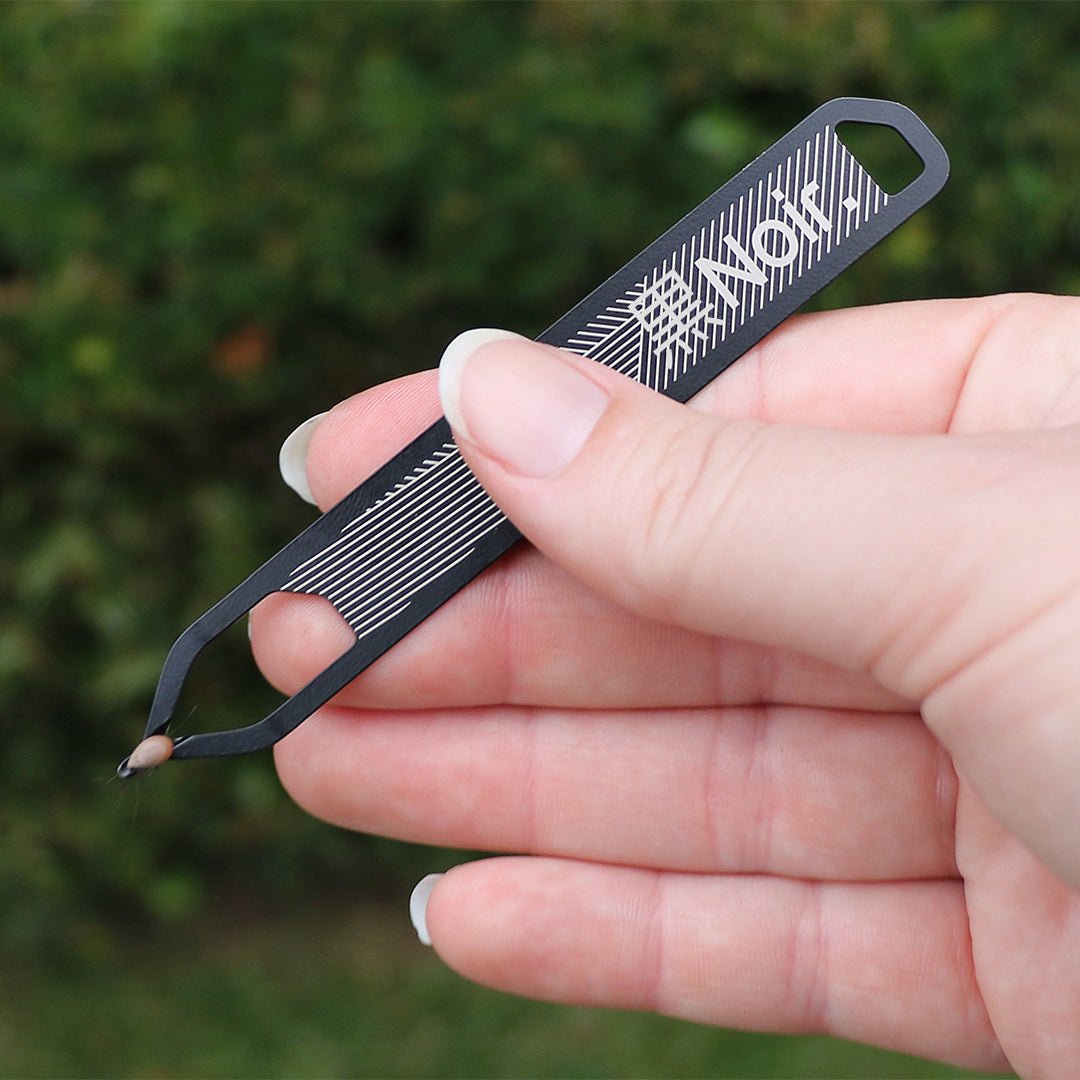
Use a tick remover. Do not pull the tick out with your fingers. This increases your dog's risk of infection. Place the tip of the tick remover over the tick as close to the skin as possible and make a sweeping motion to remove the tick. You will see that the tick will release on its own.
With the tick remover from Japandi Noir you can quickly and accurately remove a tick. Due to the sweeping motion, unlike with tick tweezers or pincers, tearing off the tick's body is no longer possible. Because the tick is not squeezed, you run less risk of the tick emptying its stomach contents, which may contain bacteria. Hang the tick remover on your keyring so you always have it with you.