

Things you didn't know about sleeping dogs
How long does a dog sleep? Do dogs dream? Does a dog need a dog bed? How do I choose the perfect dog bed or dog cushion? Many questions with the answers below.
How long does a dog sleep?
A dog sleeps approximately 9 to 14 hours every day. That's almost half its life. During the day, these are several shorter naps, while at night it's often a longer and deeper sleep. Dogs go through the same sleep cycle as humans. Unlike humans who have an average sleep cycle of 6-8 hours, a dog's is only 45 minutes. Of those 45 minutes, the dog is in a deep sleep for an average of 20 minutes.
The amount of sleep a dog needs depends on its breed, size, age, and activity level. Larger dogs often need more sleep than smaller breeds. Puppies and older dogs sleep approximately 18 to 20 hours. Puppies, in particular, need more sleep as it is important for their growth and brain development.

Do dogs dream?
When a dog is in a deep sleep, it will often dream. It has been scientifically proven that smaller dogs dream more often but for shorter periods, while larger breeds dream less often but for longer periods.
You can recognize a dreaming dog by its moving paws, as if it's running in its dream. Whining or barking can also be a sign of an active dream. Be careful! Never wake a dreaming dog. It can get startled.
Does a dog need a bed?
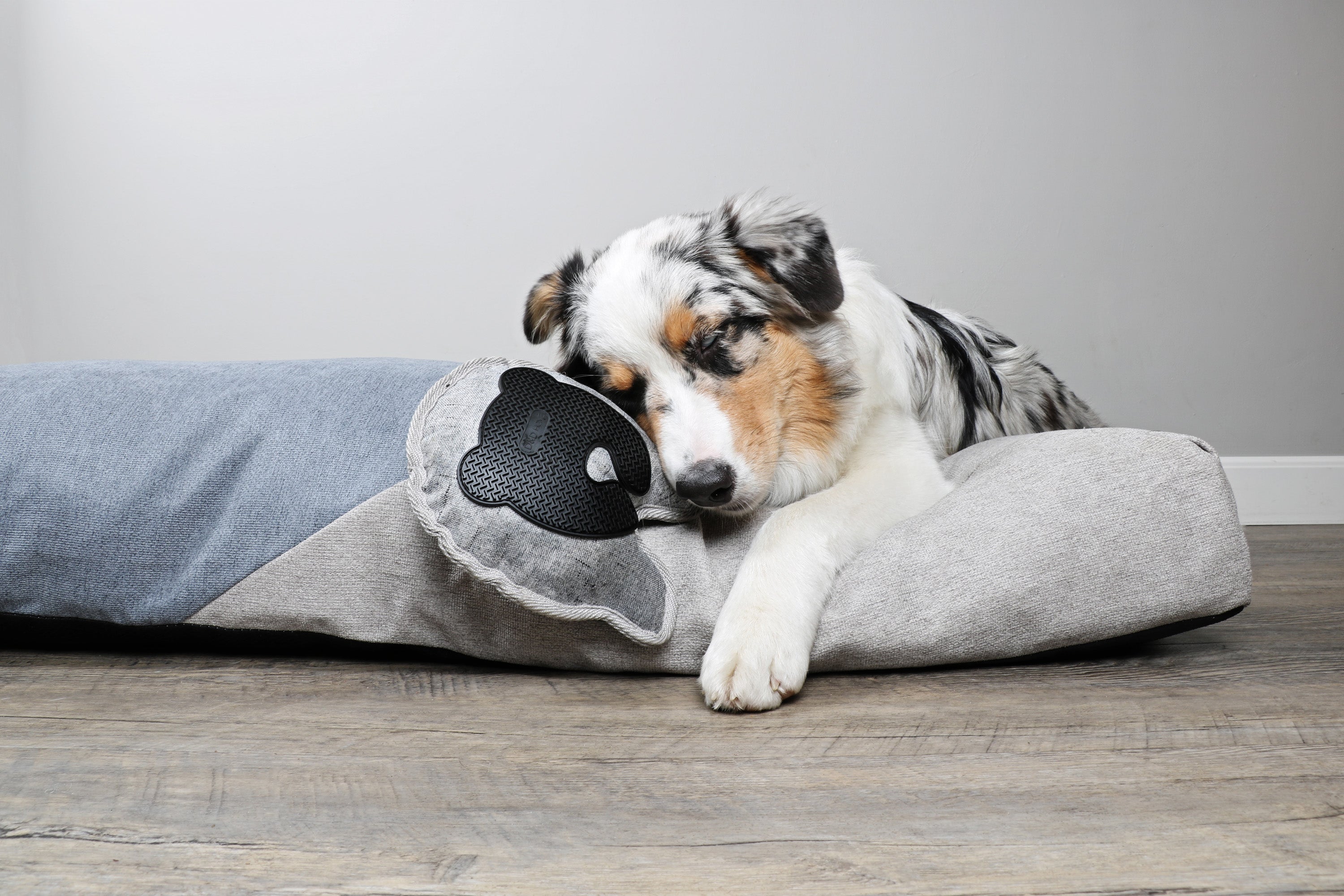
A dog spends an average of 5 hours a day on its feet. The rest of the day it lies down. Since sleep is important for a dog, a good sleeping place is too. A dog feels safer when it has its own spot where it can relax and sleep undisturbed. Moreover, a cushion or bed limits dog hair on your carpet, sofa, or bed. As a dog gets older, problems such as arthritis, hip dysplasia, and other joint issues can develop. A supportive cushion is especially important in these cases. It will not only provide support but also relieve pain.

How do I choose the perfect dog bed?
If you are looking for a new sleeping spot for your dog, it is important to consider a few things. First, the size; make sure your dog fits entirely on the cushion or in the bed. Full body support is important. You wouldn't want to sleep with your feet off the bed, would you? Since a dog likes to feel safe, a bed that is too large is also not recommended.
Secondly, the material is important. Dogs have sharp nails and occasionally chew things up. So, it's best to choose a sturdy material. There are also ergonomic dog beds and cushions for dogs with joint problems. A sturdy bed with memory foam is ideal for this.
The last criterion is the model. Does your dog like to sleep curled up? Then choose a dog bed. But if your dog gets warm quickly and prefers to stretch out when sleeping? Then choose a sturdy dog cushion.